How Dental Implants Work, From Consultation to Completion
You may have managed around a missing tooth for years and now want to know what replacing it will involve. As you look into how dental implants work, the scans, surgery, and healing periods can raise questions about when you’ll have a tooth to chew with. We plan those stages around the bone available and the replacement you need, including what you can wear while the site heals.
At Chief Dental in Squamish, British Columbia, we place implants and make the teeth they support in our office. Dr. Jonathan Visscher and Dr. Debra Matson use digital planning and our on-site lab to work out both stages before surgery. Depending on the bone and implant stability, we may attach a tooth at the placement visit or allow more healing time first.
The Implant Supports the Replacement Tooth
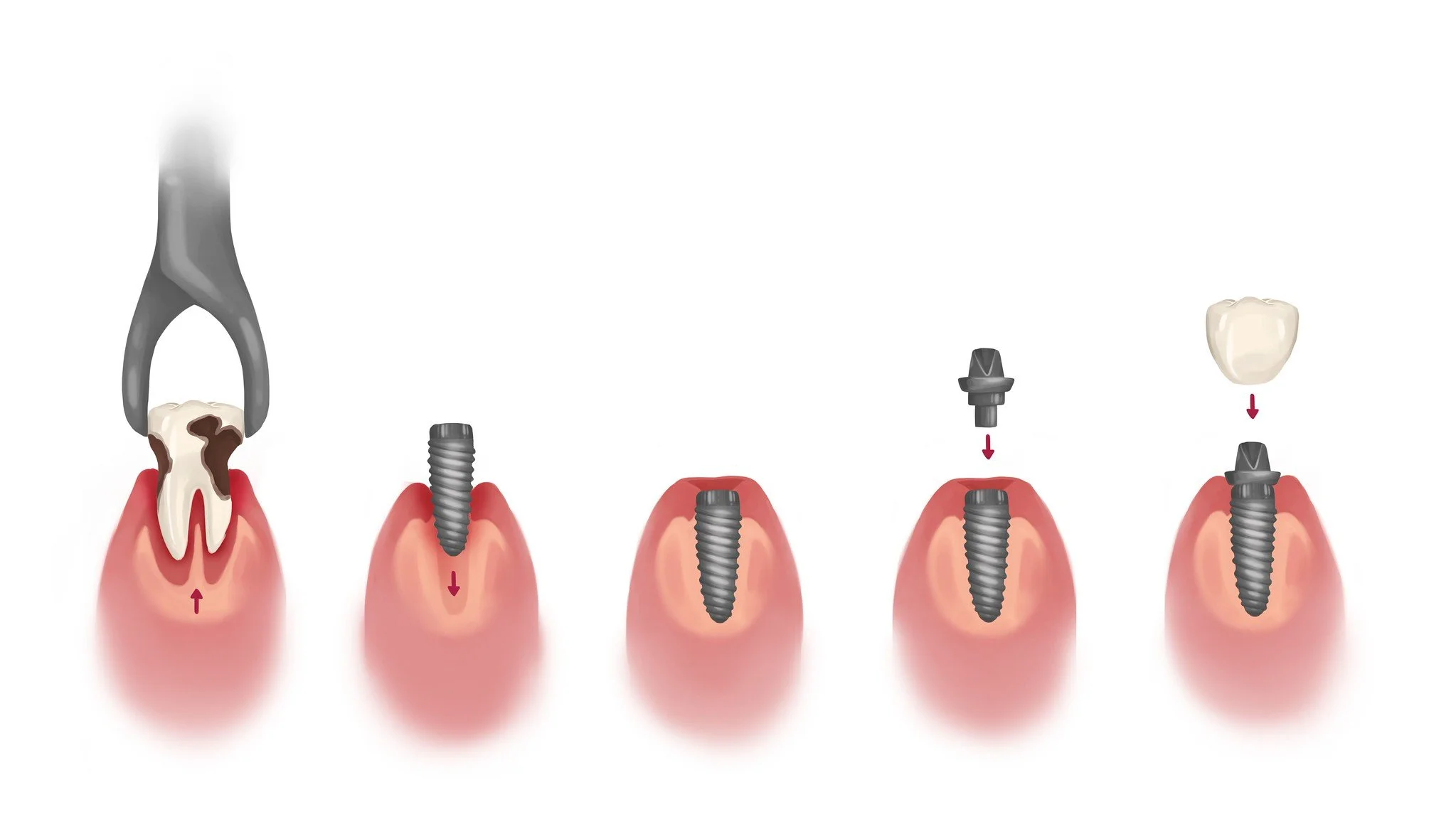
An implant replaces the missing tooth’s root with a post in the jawbone. A crown makes up the tooth you see and chew with, and a connecting piece called an abutment joins it to the implant. For a single missing tooth, we shape that crown to fit beside its neighbors and meet the teeth above or below it.
If several teeth are missing in a row, an implant bridge may replace them without placing an implant for each tooth. For a larger gap or a full arch, implants can support a denture or fixed replacement teeth. We work out where support is needed and how those teeth will meet your bite before planning the implant positions.
Once the crown is attached, it takes the chewing pressure while the bone holds the implant beneath it. Over time, the crown or its connecting parts may wear or loosen even if the implant remains firm. At follow-ups, we check those connections as well as the gum and bone around the implant.
Your Implant Consultation
At the consultation, we check the gums, remaining teeth, bite, and bone around the gap. We also ask about your health and medicines because they can affect healing after surgery. If we find active decay or gum disease, we may need to treat it before placing an implant.
We use a CBCT, a 3D X-ray, to see the width and height of the bone and nearby structures such as nerves. A digital scan records the shape of your teeth and gums for the new crown or other replacement. Together, those records help us position the implant where it can support a tooth you can bite with and clean around.
We also ask what you’ve been working around at home. You may want to stop moving food away from a back-tooth gap, or replace a front tooth that shows whenever you speak. Those concerns help us plan the replacement and any temporary tooth, and we can go over alternatives if an implant isn’t the option you want.
Bone Support May Affect the Timeline
The gum over a missing tooth may look healed, even though the bone underneath has become narrower or shorter. Some sites still have enough bone for an implant, while others need rebuilding first. A 3D X-ray lets us see that support before deciding where to place the implant.
If the area needs more bone, we may recommend a graft to preserve or rebuild it. Sometimes we can do that during an extraction or implant placement. Other areas need the graft to heal first, and we explain that wait and any care another clinician will provide before you begin.
If a graft is included, the early recovery may involve additional stitches and instructions for protecting the area. The deeper bone then continues healing over a longer period, often measured in months. That extended bone-healing interval does not mean the initial soreness should continue for months.
Planning Where the Implant Will Go
At Chief Dental, we plan the proposed crown or bridge along with the implant position beneath it. We can then prepare a custom surgical guide using that digital plan. The guide helps transfer the planned position to the placement procedure.
With CEREC technology and our on-site lab, we can design and make custom restorative components. We shape the new tooth to fit beside its neighbors and meet the teeth above or below it. We also leave access for cleaning, because a tooth that fills the space still needs a way to reach the gumline and its sides.
Before surgery, we explain how we’ll numb the area and go over any other comfort options in your treatment plan. We also give you preparation directions, including anything that affects eating or medications beforehand. If your health or prescriptions change before the appointment, bring that up so we can check whether the directions need to change.
Surgery and Early Recovery
We numb the treatment area before placing the implant. If you need several implants or other preparation, we explain those steps before surgery as well. Afterward, the instructions we give you cover eating, cleaning, activity, and any medicines needed for your procedure.
The area may feel tender or swollen during early recovery. Follow the softer-food and chewing directions we give you, even if the new tooth looks ready for a normal meal. A temporary or immediately attached crown may need protection from biting pressure while the implant bonds with the bone.
If pain or swelling gets worse, bleeding doesn’t settle, or you develop a fever, contact us before the next follow-up. A temporary tooth that loosens or starts hurting also needs a check. At follow-ups, we look at how the gum and implant site are healing and explain when we can move to the next stage.
Healing Before the Final Tooth
As you heal, bone forms a close connection with the implant surface. We call this osseointegration, and it helps the implant hold steady under chewing pressure. That process may take several months, even after the gum feels comfortable and looks healed.
If the site allows it, we can sometimes attach the custom crown at the same visit as the implant. The bone must hold the implant securely, and the new tooth must fit a bite that won’t put too much pressure on it during healing. Even if you leave with a tooth in place, follow the chewing directions while the bone continues bonding to the implant.
If the final tooth needs to wait, we discuss a temporary replacement before surgery. A front-tooth gap may need a different temporary option from a back-tooth space, and the temporary must avoid too much pressure on the healing implant. We check the site’s progress before attaching the final restoration and explain any changes to the expected timing.
Cleaning and Caring for Your Implant Teeth
When the final tooth is ready, we check how it fits beside its neighbors and how it meets your bite. We also demonstrate cleaning around the sides and gumline, so you know where to guide the floss or brush. For a connected bridge or denture, we show you how to reach beneath the replacement teeth as well.
The implant crown can’t get a cavity, but plaque can still inflame the gum around it. The body’s response to those bacteria can also damage the supporting bone if disease progresses. Clean the implant surfaces daily and keep follow-up visits so we can remove buildup and check the tissues. If the gum keeps bleeding or you notice swelling, drainage, or movement, arrange a visit even if chewing feels comfortable.
If you clench or grind, that pressure also reaches the implant crown and its connecting parts. We may recommend a protective appliance and check how it fits after any new dental work. At follow-ups, we look for wear or loose connections as well as inflammation around the implant.
Implant Planning in Squamish
If you’re ready to replace a missing tooth, we can walk through the stages and explain what you’ll eat and wear between appointments. Dr. Visscher or Dr. Matson can show you the bone available and explain the temporary and final teeth we could make for you. Schedule a consultation with our Chief Dental team in Squamish, British Columbia, and let’s plan for the foods and smiles you’ve been working around!
Image from Authority Dental under CC 2.0